


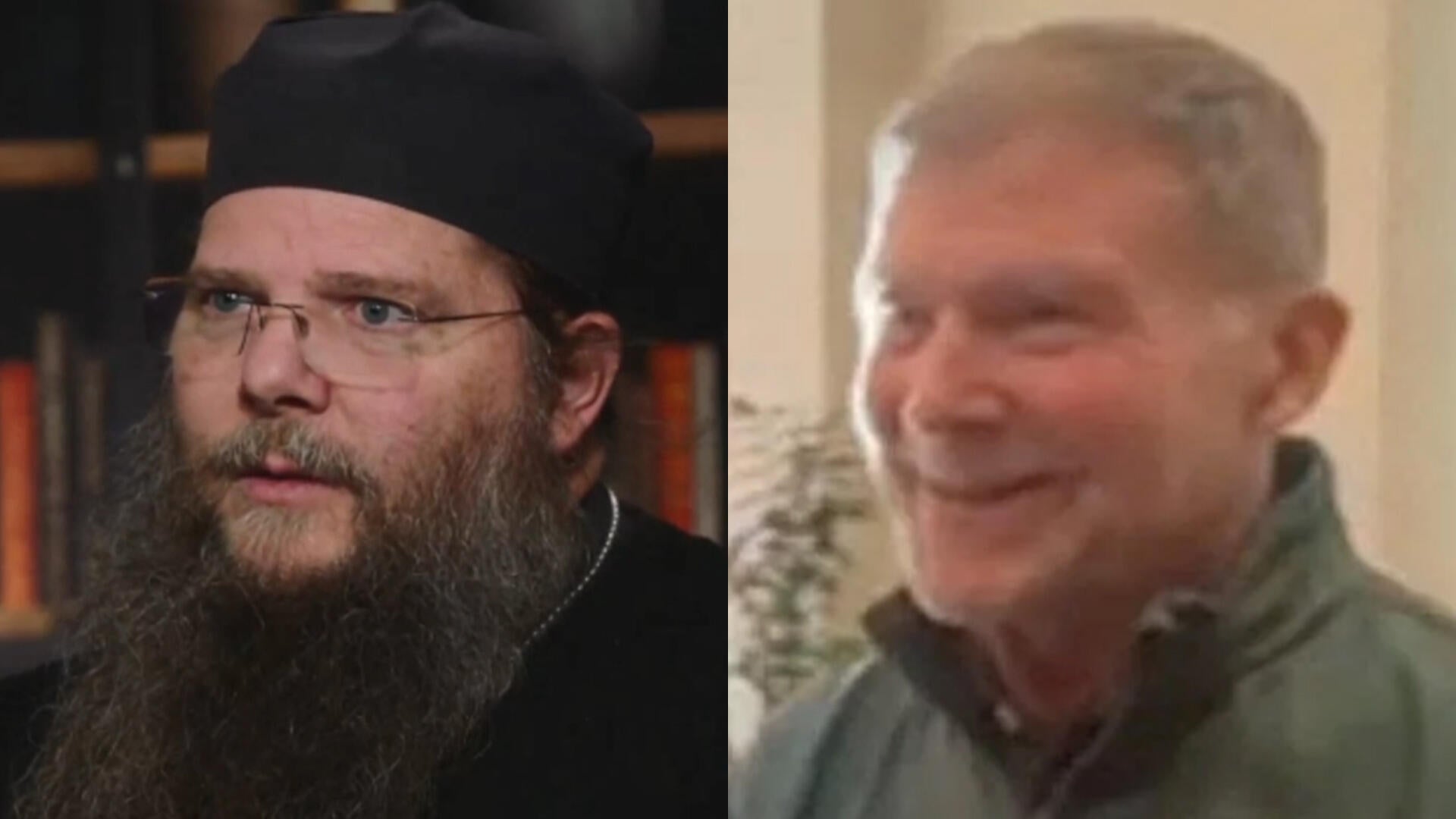
▶ Watch Video: Son of detained American Stephen Hubbard reacts to Russia releasing him after 4 years
Washington — Fr. Joseph Coleman feared he would never again see his father, Stephen Hubbard, when they had a brief phone conversation last year while Hubbard was in a Russian prison.
“He was expressing a very extreme tiredness with life, the life that he was experiencing at that time. I don’t want to say suicidal thoughts, but the conversation hinted it leaned in that direction,” Coleman, a Greek Orthodox priest, told CBS News on Wednesday in his first television interview since his father’s release.
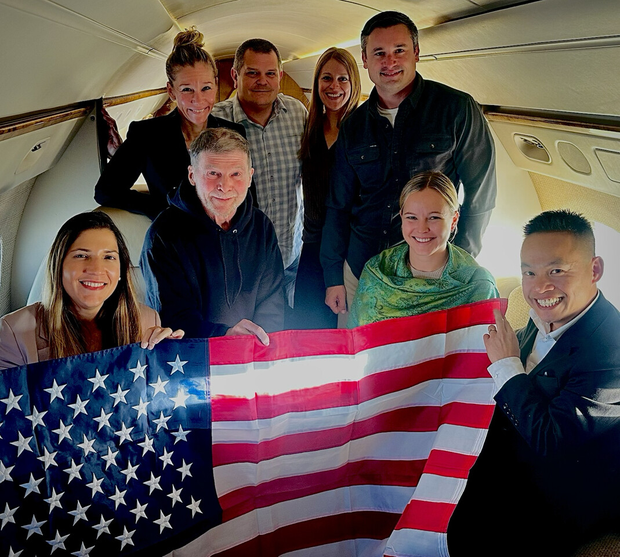
Hubbard’s release was announced earlier Wednesday during a meeting between U.S. special envoy Steve Witkoff and Russian President Vladimir Putin. Hubbard, a U.S. citizen, was imprisoned in Russia for more than four years after being accused of fighting for Ukraine. The U.S. government had deemed Hubbard wrongfully detained.
President Trump said Putin had agreed to release Hubbard at his request, with “no ‘swap’ necessary,” though he also said that his decision to waive new sanctions against Russia played a role in Hubbard’s release.
In a one-minute phone call with his father before Hubbard took off from St. Petersburg, Coleman said he sounded better than he had during their last conversation in May 2025. Witkoff was also present, leaving little opportunity for a private exchange.
“I want to embrace him as a son embraces his father. I want to personally assess his health to make sure he’s well,” Coleman said. He said he would also give his dad space to adjust to freedom and expected to see Hubbard later that evening.
Coleman, who lives in Cyprus, did not grow up in the same home as Hubbard, who was divorced from Coleman’s mother. He said the family had lost track of Hubbard entirely for roughly three years after his detention.
Martin De Luca, Hubbard’s U.S.-based attorney, told CBS News that when his legal team took on the case in February 2025, neither the family nor the U.S. Embassy knew precisely where Hubbard was being held.
Lawyers in Russia eventually located him and arranged for legal visits, money for food and basic necessities, and the brief phone call with his son.
De Luca said the isolation had taken an enormous toll.
“It’s just being isolated from everybody you’ve ever known and just from the outside world,” he said.
After Putin granted Hubbard’s release, Witkoff praised the Russian president as a “humanitarian,” prompting swift backlash from Republican and Democratic lawmakers. Putin is wanted by the International Criminal Court for alleged war crimes involving the deportation of Ukrainian children, and Russian forces have been accused of widespread abuses during the war.
Asked about Witkoff’s description of Putin, Coleman called his father’s release “a small step toward peace in this greater conflict” and thanked Putin for signing off on the deal.
He described the decision as an act of “compassion and even mercy.”
Hubbard, a 74-year-old retired schoolteacher, was captured in Ukraine shortly after Russia launched its full-scale invasion in 2022 and accused of manning a checkpoint for mercenaries. He was later sentenced to almost seven years in a penal colony following a closed-door trial.
His family has consistently disputed the charges.
De Luca said his legal team conducted its own investigation, interviewing people who knew Hubbard and examining his circumstances before the invasion. He said they found no evidence that Hubbard had served in the Ukrainian military or was physically capable of doing so at roughly 70 years old.
“We have not seen any evidence to support those allegations,” De Luca said. He added that the Russian case file was largely sealed and that his team had repeatedly sought evidence substantiating the charges.
De Luca and Coleman both credited the Trump administration’s diplomatic engagement with Moscow for securing Hubbard’s freedom.
Asked whether recent U.S. decisions benefiting Russia — including sanctions relief and purchases of Russian diesel — were connected to Hubbard’s release, De Luca said he did not believe there was a direct link, though he acknowledged that bilateral relationships involve multiple overlapping interests.
Mr. Trump, however, has explicitly said that allowing new sanctions to take effect would have prevented Hubbard’s release.
And despite Hubbard’s release, as many as 20 Americans remain imprisoned in Russia, including some whose families dispute the charges against them. The State Department continues to warn Americans against traveling to Russia because of the risk of wrongful detention.
De Luca said he was not concerned that the administration’s engagement with Moscow would encourage further detentions, arguing that diplomatic dialogue had helped secure several Americans’ freedom.
But Russia has not been designated a state sponsor of wrongful detention under a new Trump administration policy, despite its history of imprisoning Americans on questionable charges. Iran and Afghanistan have both received the designation.
Coleman stopped short of blaming his father for his circumstances but acknowledged he might have made a mistake by remaining in Ukraine as Russian forces advanced.
“The Russian forces told foreign nationals to leave and he did not,” Coleman said. “I do not like what happened to my father. I am ecstatic that he is free. But he was living in an area that was a war zone.”
“I’m not saying his detainment was justifiable. I’m not saying that,” he said. “But these things happen in war.”