


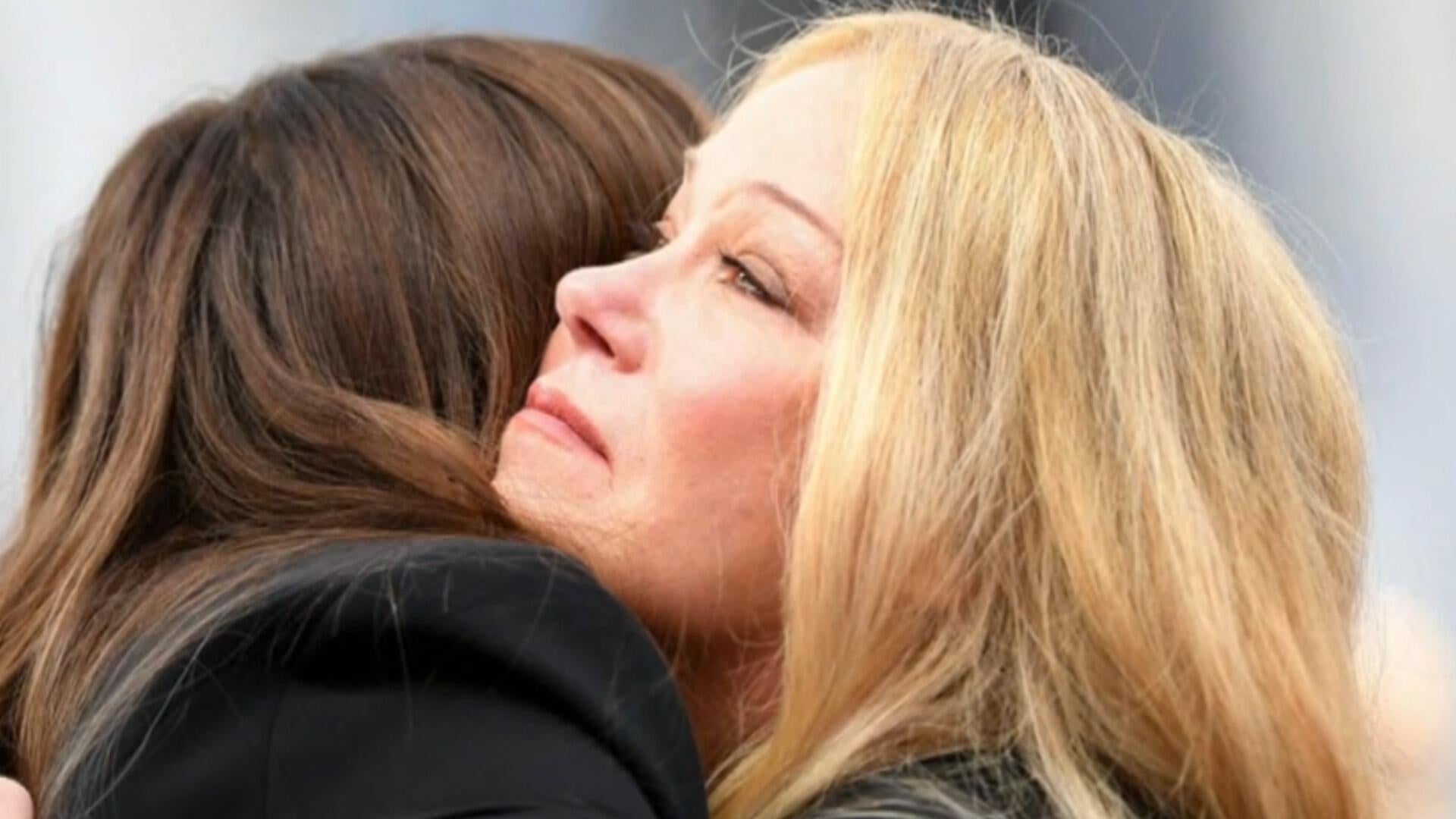
▶ Watch Video: Christina Applegate left with health questions after revealing MS misdiagnosis
DeMonica Amerson’s diagnosis of multiple sclerosis in 2001 had been a shock. No one in her family had ever had the autoimmune condition, and it had been difficult to diagnose. Doctors had first thought she had optic neuritis because her symptoms were in her eyes. Then they suspected lupus. After a spinal tap, she was diagnosed with MS.
At the time, Amerson had never heard about the condition. She had just graduated from college and expected to be in the prime of her life. Instead, she had to give herself daily shots to treat the condition.
“I was mad, I was hurt, I was nervous, confused, all the things,” said Amerson.
But over the years, her perspective changed. As MS treatment evolved, she moved from daily shots to a monthly infusion. A port was placed in her chest to make the medication easier to deliver. She engaged in advocacy and fundraising through the MS National Foundation. She got married and welcomed two daughters, and worked as a school administrator. Even as her condition threw curveballs, including the occasional relapse, she “just kept going.” Amerson attributed those relapses to the progressive nature of MS. Her doctors never suggested otherwise.
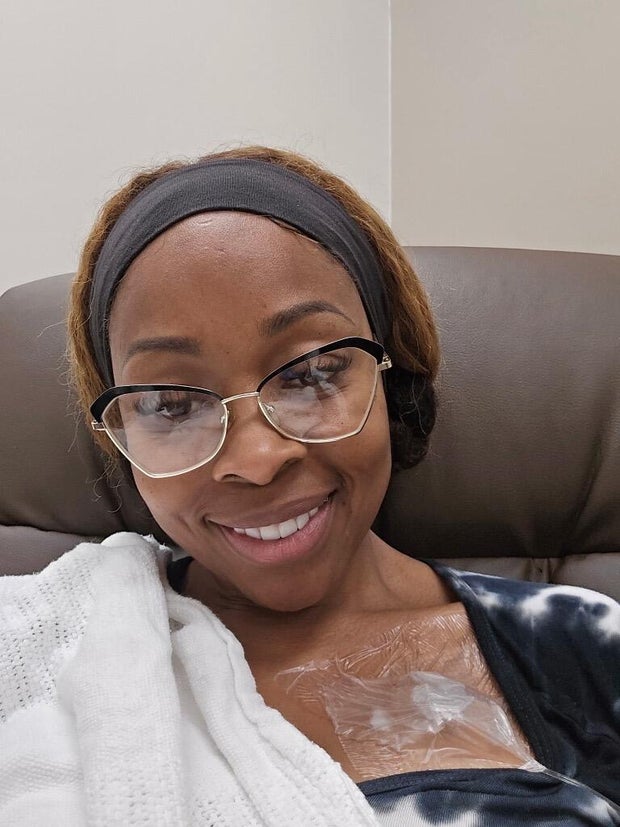
Then, in 2019, she had a significant flare. She was lethargic, and her legs were numb. Amerson immediately went to the hospital, missing her daughter’s birthday party. In the ER, she began to feel pressure in her eyes and began vomiting. An on-call neurologist examined her and ran a specialized blood test. Eventually, Amerson’s condition stabilized, and she was discharged. A few days after returning home, she received a call from the neurologist. The doctor believed she had a rare autoimmune disorder and recommended she see her neurologist. Amerson was horrified to receive that diagnosis on top of her MS. When she saw her neurologist, he sent her to a specialist.
Follow-up testing by the specialist revealed something shocking: Amerson had never had multiple sclerosis at all.
The risk of MS misdiagnosis
Dr. Robert Bermel, the director of the Mellen Center for MS at Cleveland Clinic, told CBS News earlier in October that large studies looking at the risk of MS misdiagnosis have found that between 15% and 20% of patients diagnosed with multiple sclerosis are eventually found to not have the condition.
The topic burst into the mainstream earlier this month, when actor Christina Applegate announced on her MeSsy podcast that she had been incorrectly diagnosed with MS for nearly five years. Applegate, who uses mobility aids to walk, said doctors are still not sure what’s causing her symptoms.
Dr. Josef Gutman, the director of NYU Langone’s Long Island Comprehensive MS Care Center, previously told CBS News that the wide spectrum of symptoms that can be attributed to multiple sclerosis makes the condition difficult to diagnose. Both Bermel and Gutman said there are a number of autoimmune diseases that can mimic MS. A misdiagnosis is usually found when someone’s symptoms do not respond to MS treatment, spurring more specialized tests.

Typically, a misdiagnosis occurs because abnormalities on a brain scan are misinterpreted, Bermel said. New diagnostic criteria, published in 2025, are trying to reduce the risk of misdiagnosis. Gutman said the process often requires some interpretation by a person’s doctor.
“It’s sort of the story, combined with MRI imaging, combined with other markers like spinal fluid, that help us make the MS diagnosis,” Gutman said. “It’s not like diabetes, where there’s one blood test and if it’s above this number, it’s diabetes, if it’s below this number, it isn’t. There’s a lot of things going into the diagnosis.”
“Here comes something different”
Amerson had sometimes wondered if she was on the right medication for her MS, but she had never thought she might not have the condition. It had been a part of her life for so long that she took it as a fact. But a second opinion confirmed she had a rare condition called neuromyelitis optica spectrum disorder, or NMOSD.
Dr. Mark Tullman, associate director of the White Plains Hospital MS Center, described NMOSD as a rare autoimmune disease that affects the central nervous system, especially the spinal cord and the optic nerves that connect the eyes and brain. Tullman, who did not treat Amerson, said the condition can cause similar symptoms to MS, including sudden vision loss, muscle weakness, bowel and bladder problems and loss of sensation. NMOSD symptoms tend to be more severe than those caused by MS, he said.
While MS has no single diagnostic test, many people with NMOSD have a detectable antibody in their blood, Tullman said. When a physician specifically looks for the presence or absence of that antibody, as the emergency room doctor Amerson had seen had, it can help inform an NMOSD diagnosis.
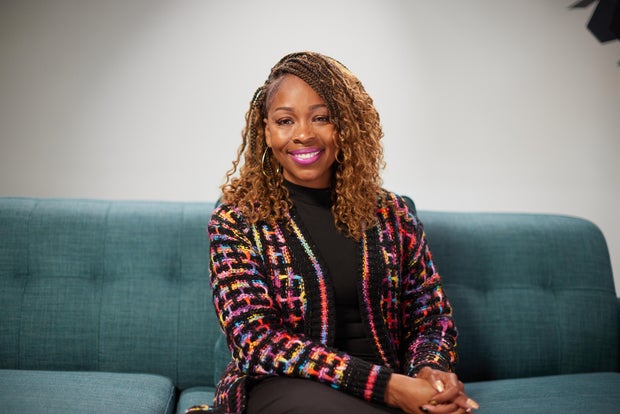
When Amerson was told she didn’t have MS, she was “so mad that (she) walked out” of the doctor’s office.
“I had been dealing with this since I was 21 years old, and now, almost 20 years later, here comes something different,” Amerson recalled thinking. “I didn’t know there was another disease that mimics MS at all.”
But Amerson knew she couldn’t focus on the negative.
“I was mad. I don’t want to say I got over it, but I accepted it,” she said. “I said, ‘I have to move forward. What does that look like?'”
“I choose to keep going forward”
Moving forward started with finding a new treatment option. Amerson, now 46, takes a medication called Uplinza, which she said is “working well.” She still experiences fatigue and pain. But she tries to take it “day by day.”
Amerson said her “heart went out” to Applegate after hearing about the actor’s misdiagnosis.
“I understand what it means to live in the unknown… I’m glad she went public with where she is and what she’s going through,” Amerson said.

Applegate’s candor echoed Amerson’s own focus on advocacy. Amerson said raising awareness for NMOSD has become a new passion. She hopes her advocacy efforts and emphasis on positivity will inspire her own daughters.
“We have so many people watching us. I know my girls are watching me. I have other teachers and leaders are watching. And so not only for them, but because I deserve the best version of myself that I can give,” Amerson said. “I choose not to give up. I choose not to quit. I choose to keep going forward.”