


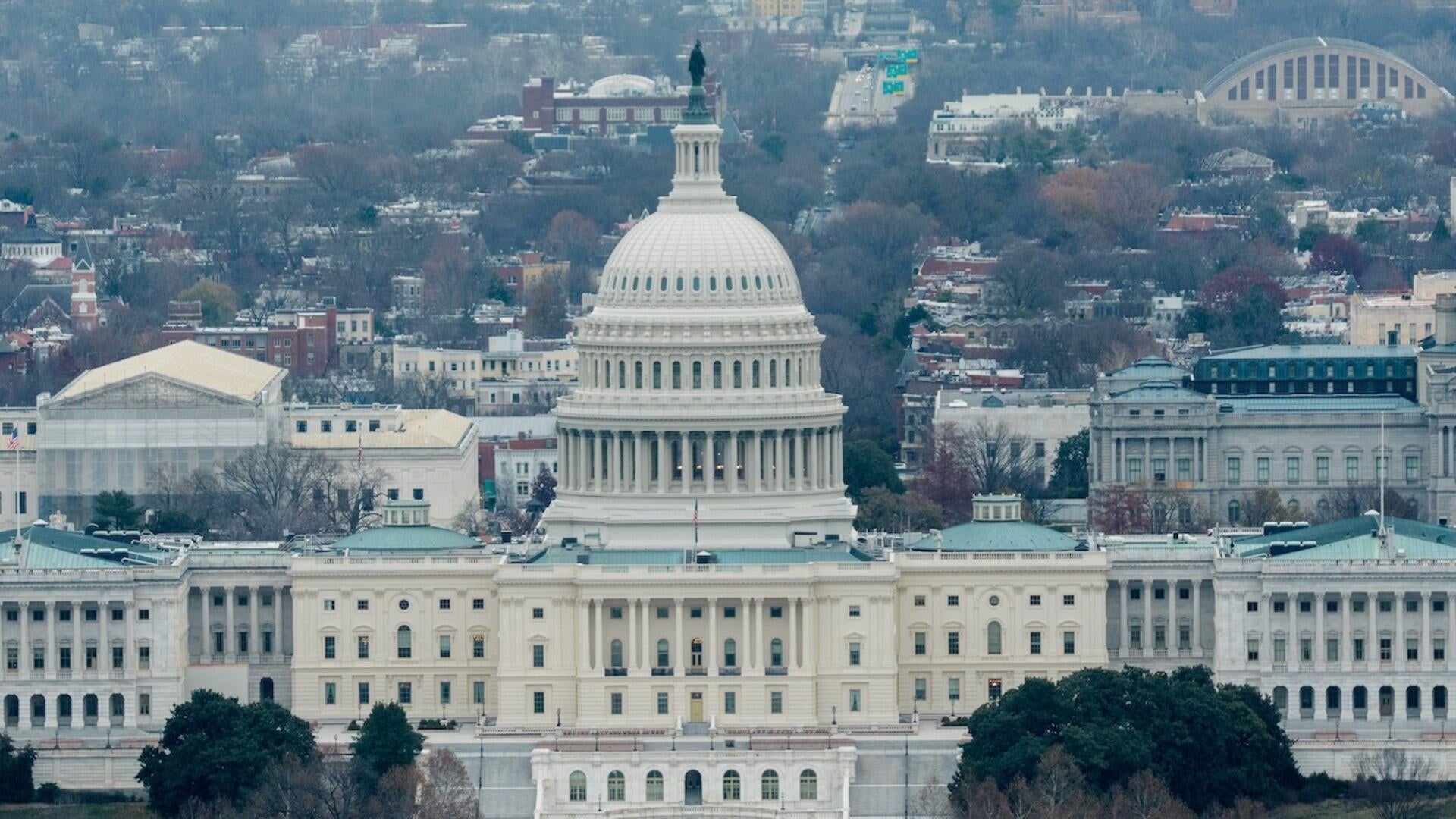
▶ Watch Video: Congress gears up for busy week on health care, national security
Washington — The Senate approved a $900 billion defense policy bill known as the National Defense Authorization Act on Wednesday, sending it to the president’s desk for his signature.
The measure cleared the upper chamber with broad bipartisan support in a vote of 77 to 20.
Sen. Roger Wicker, a Mississippi Republican who chairs the Senate Armed Services Committee, praised the bill’s bipartisan tradition ahead of the vote Wednesday.
“This will be the 65th year in a row, the 65th consecutive year that Congress has come together across the aisle and across two chambers to send the president a bill designed to sustain and strengthen the national defense,” Wicker said. “Everyone in this Senate played a role.”

The NDAA is an annual must-pass piece of legislation that sets lawmakers’ defense priorities. This year’s version, which is more than 3,000 pages long, aims to codify more than a dozen of President Trump’s executive orders, including prohibiting diversity, equity and inclusion programs at the Defense Department, authorizing the use of active-duty troops along the U.S.-Mexico border and deploying a “Golden Dome” missile defense shield.
The bill includes a 3.8% pay raise for all service members. It also includes language that prohibits transgender women from participating in women’s athletic programs or activities at military service academies.
The House approved the massive defense policy legislation last week in a 312 to 112 vote. House Speaker Mike Johnson struggled to hold his conference together for a procedural vote, facing pushback from conservatives.
Some of the pushback came from the inclusion of aid for Ukraine. The bill authorizes $400 million for military assistance in both fiscal years 2026 and 2027.
The bill would also roll back the legal justifications used to attack Iraq in 1991 and 2003, along with repealing sanctions on Syria under the Caesar Syria Civilian Protection Act of 2019. It includes provisions that limit the administration’s ability to reduce troop levels in Europe, and withholds part of Defense Secretary Pete Hegseth’s travel budget until the Pentagon hands over footage of the strikes on alleged drug-smuggling boats near Venezuela.
Since the House approved the bill, some lawmakers have expressed concerns that it doesn’t do enough to restrict military aircraft near Ronald Reagan Washington National Airport. Last week, National Transportation Safety Board chair Jennifer Homendy warned that a provision in the NDAA “does not in any way enhance safety” and “reverses safety changes” made after a midair collision in January between a military helicopter and a passenger jet that killed 67 people. The bill, Homendy said, “essentially gives the military unfettered access to the crowded and complex D.C. airspace.”
Sens. Ted Cruz of Texas and Maria Cantwell of Washington, the chair and ranking member on the Senate Commerce Committee, have been pursuing a fix. The panel advanced a measure earlier this year known as the ROTOR Act, which would tighten the rules in D.C. airspace. Later Wednesday, Cruz successfully passed the measure under unanimous consent.
The Texas Republican said he, Cantwell and Sen. Jerry Moran of Kansas had made “significant progress” and had reached an agreement to pass the bill unanimously. He also noted that the White House backs the bill and “is committed to helping us work with our House colleagues to see that the ROTOR Act passes in that chamber.”
“We still have a few small, outstanding issues, but I’m optimistic that we’re going to get this done and signed into law as soon as next month,” Cruz said.