


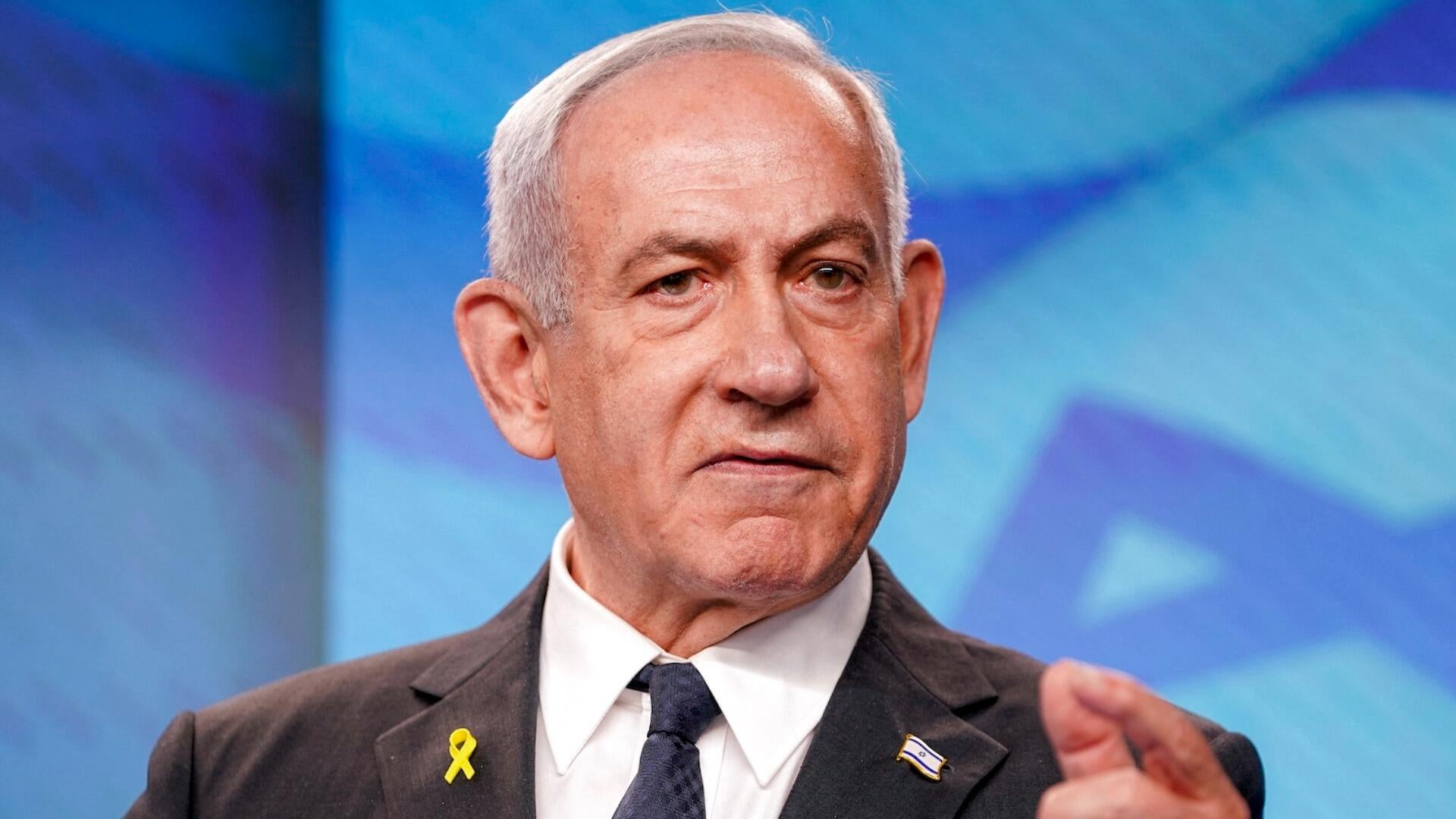
▶ Watch Video: No clear winner in Israeli election, exit polls show
Exit polls from Israel’s major television networks project that a majority of Israelis voted against Prime Minister Benjamin Netanyahu’s coalition in Tuesday’s election, but his Likud party still emerged as the largest party among all the contenders. Neither bloc, Netanyahu or the opposition, has a clear majority.
While Netanyahu appears to have won fewer votes than his main challenger, according to the early exit polls, both candidates will likely struggle to cobble together a coalition.
One or the other would need to obtain majority support in Israel’s 120-seat parliament, known as the Knesset, in order to form a government.
Israel’s two Arab parties won more seats in parliament than in any previous election. That electoral success comes after what some Arab voters told CBS News was a difficult time for them in the country under the hard-right government of Netanyahu, prompting a historic turnout for the minority community.
Both Netanyahu and those opposing him have vowed not to form a government reliant on Arab parties, arguing it would endanger the country if they gain enough seats to influence Israel’s engagement in its myriad conflicts. Arab citizens of Israel are around 20% of the population.
If the opposition breaks their preelection vow — a common occurrence in Israeli politics — they could take power and remove Netanyahu. A central tenet of Netanyahu’s election campaign was keeping the Arab parties out of power.
This is the first election since the Oct. 7, 2023, attacks by Hamas, which authorities have acknowledged as Israel’s most catastrophic security failure since the country’s founding in 1948. Israelis headed to the polls with their country still fighting in the subsequent multifront war in Gaza, Lebanon and Syria, and after two direct rounds of conflict with Iran and Netanyahu advocating for renewed strikes.
For many Israelis, after three years of war on multiple fronts, the election is seen as existential, and voter turnout appeared to be high.
Netanyahu vs. the “change bloc”
Netanyahu, Israel’s longest-serving prime minister and leader of the Likud party, is seeking to form another coalition similar to his current government, which relies on partnerships with ultranationalist and Jewish religious parties.
Netanyahu is telling voters that Israel’s campaigns in Gaza, Lebanon and especially Iran, are ongoing, and he needs more time to finish what his government started.
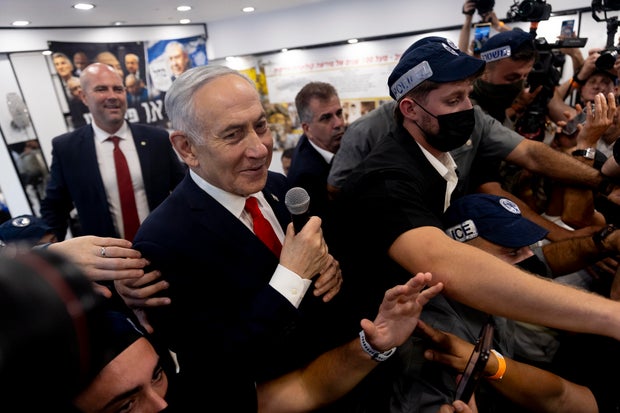
President Trump offered a full-throated endorsement of Netanyahu last week. He reiterated his administration’s firm support for the war the two men launched jointly against Iran almost eight months ago, and warned that he could be disinclined to continue with it if Netanyahu doesn’t hold onto power.
“If Israel has the wrong Leader, which would be anyone other than Bibi, America will have to do this work ourselves, and I am not inclined to do so,” Mr. Trump wrote on Truth Social.
Running against Netanyahu is a diverse group of parties with different ideologies but one clear common denominator: They all want Netanyahu out of power.
The front-runner to lead the “change bloc,” should its various parties collectively win enough seats to build a coalition, is former Israeli military chief Gadi Eisenkot, who leads the centrist Yashar party.
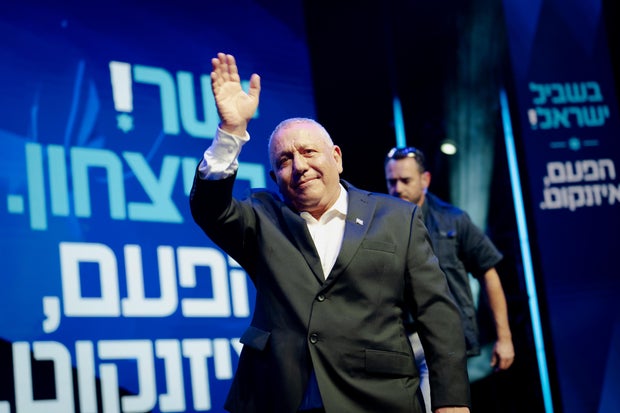
Eisenkot lost his son and two nephews while they were serving in the military in Gaza. He was part of the Israeli war cabinet for much of the first year of the Gaza war, working alongside Netanyahu. About half of his party’s candidates in Tuesday’s election are women, in stark contrast to the male-dominated Netanyahu coalition.
Eisenkot is framing himself as a humble veteran who wants to reunite Israel after years of division that he blames on Netanyahu.
What happens next?
In the event that neither bloc wins a clear majority in the Knesset, there are several paths forward to a new Israeli government.
One option is that parties or individual lawmakers could break election promises and switch sides, for which there is plenty of precedent in Israeli politics. There could be weeks of negotiating before a coalition is agreed on.
Another possibility is the change bloc, if it wins a significant share of the votes but not quite a majority, could seek to form a minority government. To do that, the parties just need to win more seats collectively than the other side, even if it’s not more than the 50% of the 120 available.
Arab parties could give the change bloc that plurality by either voting in favor of a minority government, or just abstaining and not voting against its formation.
If there’s a stalemate and neither side can build a coalition government, the country will have to hold new elections. There is plenty of precedent for that scenario, too.
Between 2019 and 2022, Israel held five elections due to electoral deadlock.