


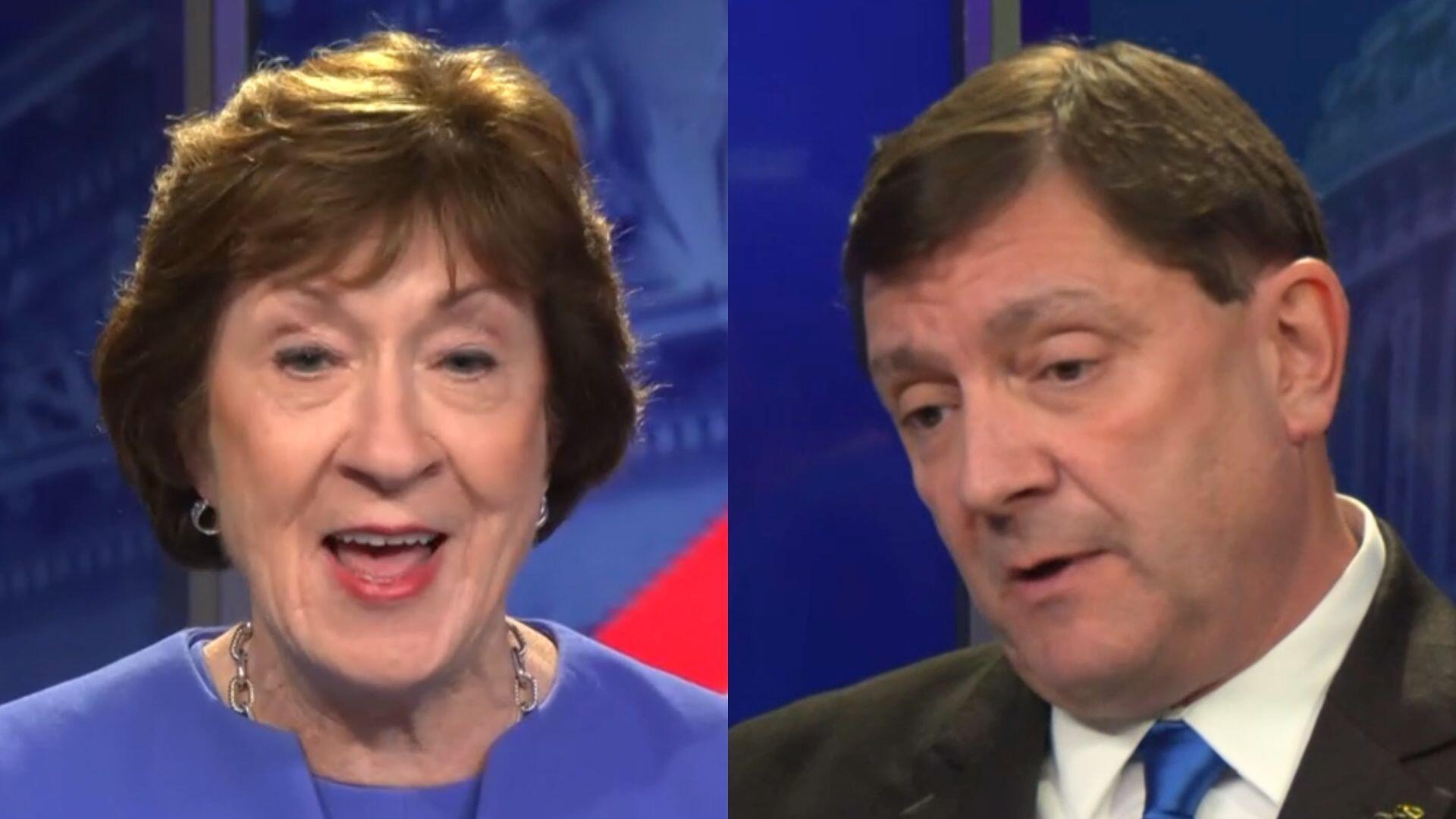
▶ Watch Video: Candidates clash in Senate debates in Georgia, Iowa and Maine
A short interruption in the Maine Senate debate from Oct. 15 is still relevant a week before Election Day. Democratic nominee Troy Jackson told five-term incumbent Sen. Susan Collins to “shut up,” after she said a protester was “obviously one of Troy’s supporters.” Jackson has since been asked to apologize, which he declined to do, and the clip made its way into GOP attack ads.
Maine is among the close races that will determine which party controls the Senate. Jackson’s comment, unprompted by a question from the moderator or an answer from Collins, speaks to the high risk of debating. Small moments can cause catastrophes, according to Democratic strategist and CBS News contributor Chuck Rocha.
“You may not win a race during a debate, but you can certainly lose one,” Rocha said. “People are super cautious these days.”
In this midterm cycle, 18 of 35 Senate races and 12 of the 36 gubernatorial races did not feature a debate between the major party candidates, and in those that did occur, many were defined by mudslinging and character assaults that wound up viral online.
“Debates are defined by big moments,” Republican strategist and CBS News contributor Terry Sullivan said. “Ninety-five percent of what happens in debates does not matter. You’re banking on not making the 5% mistake and trying to force the other guy to make the 5% mistake.”
Candidates backing away from debates
Over half of the 2026 Senate races will not feature debates between the major party candidates. That number includes Ohio and Texas, two of the five races rated as toss-ups by CBS News.
In an analysis of past toss-up races from Cook Political Report, only one of the four races in 2024 and 2022 did not have debates. The seven toss-ups in 2020, nine in 2018 and seven in 2016 all had debates.
Rocha said going on stage “without any control of the messaging” can do more harm than good in these closely contested races. In Texas, which is on track to be the most expensive Senate in history, Democratic candidate James Talarico has repeatedly called on his Republican opponent Ken Paxton to debate and even suggested he would go “into the lion’s den” and let Fox News host it. Talarico eventually hosted a solo CNN town hall. Rocha noted that a debate could draw new attention to Paxton’s past scandals and controversies. “He don’t want to be asked about all the negative [stuff] in his life,” Rocha said of Paxton.
A third of gubernatorial races will not have debates, a significant jump from years past. When the same set of 36 gubernatorial seats were up in 2022, candidates in seven opted not to debate. In 2018, all but two races included debates, and in 2014, all but four did.
Candidates on both sides of the aisle have also argued there is no benefit to debating. Ohio Democratic candidate Amy Acton said she would not debate GOP nominee for governor Vivek Ramaswamy because it cannot be “a civil dialogue about facts when you’re with somebody who’s a chronic liar.”
In Alabama, Sen. Tommy Tuberville, who is running for governor, argued there is nothing to debate with his opponent, former Sen. Doug Jones, because “we know where the Democrats stand, and we know where conservative Republicans stand.” Jones held his own “debate” on Oct. 21, where he played clips of Tuberville.
Arizona Democratic Gov. Katie Hobbs declined to debate her Republican opponent, Rep. Andy Biggs, because “face-to-face interactions with Arizonans are more effective than a stage that is designed for nothing but political soundbites and theater.” Biggs participated in a debate alongside “No Labels” candidate Teri Hourihan and has criticized Hobbs. He wrote on X, “Your record is so disastrous you won’t even get on a debate stage to defend it.”
Pushing the 5% mistake
The cornering of opponents and the effect of the digital age were on display in the debates that did occur. Debates in Michigan and Alaska, which are among the crucial Senate toss-up races, also had viral moments like in Maine. Nominees appeared closer to enemies than as candidates from opposing parties, with their attacks garnering significant attention online.
In Michigan, Democratic Senate candidate Abdul El-Sayed said Mike Rogers was a “sock puppet” for the president, and Rogers accused El-Sayed of being an extremist connected to the Muslim Brotherhood. Asked if there should be guardrails for flock cameras, Rogers suggested El-Sayed would want them because of a relative “that might be on the watch list.” El-Sayed challenged his opponent “to go ahead and say it,” leading Rogers to allege El-Sayed’s mother worked for a company “that was indicted for funneling money to al Qaeda.”
Alaska’s Senate debate also produced viral moments for both candidates. Republican Sen. Dan Sullivan took a few notable swipes at Democratic nominee Mary Peltola. He accused her of “character fraud” over a New York Times’ report on Peltola’s treatment of staff that led the moderator to call for “some decorum.” But in another swipe, he accused Peltola of having pre-written answers, and when moderators assured no one did, Peltola replied, “I’m prepared,” leading to a viral moment for Democrats.
Debates used to be an opportunity for “people to get out of their echo chambers and their partisan media and listen to the other candidate in a way that is not filtered for them,” said Kathryn Cramer Brownell, a history professor at Purdue University who focuses on the relationship between media and politics. The current media climate, however, has “undermined the potential” for debates to actually broaden a candidate’s appeal.
“How do you generate more of that broad viewing experience in the age of social media?” Brownell asks. “Frequently, debates just become boiled down to very short clips that are circulated through social media, and, then, again, filtered through a more partisan lens.”